


Affinity Wins Two Awards at 2026 CJ Excellence Awards
New York, September 23, 2026: Affinity Global announced today that its publisher brands VEVE and SitePlug were honored with two awards at the 2026 CJ Excellence Awards: Publisher of the Year for VEVE and SitePlug by Affinity, and Best Channel Expansion and Activation Strategy for the Expedia Group x VEVE and SitePlug by Affinity partnership.

NucleusLinks Launches Product Feeds to Close Affiliate Commerce Data Gap
Chicago, August 14, 2026: NucleusLinks, the affiliate marketing software platform built within the Affinity ecosystem, today announced the launch of Product Feeds, a product data infrastructure layer designed to help affiliate publishers standardize, enrich, and activate merchant data at scale.
Affinity expands its business in Germany and opens an office in Paris
Affinity is significantly expanding its business in the DACH region. Through its platform mCanvas, a leading provider of high-impact mobile and CTV advertising experiences, the company is filling several key roles at its Berlin location. With the opening of a new office in Paris, Affinity is also accelerating its European expansion.
Affinity Joins AdCP as Founding Member to Bring Enterprise Native Supply into Advertising’s AI Future
Press Release Share this Affinity Joins AdCP as Founding Member to Bring Enterprise Native Supply into Advertising’s AI Future Affinity to contribute towards agentic standards
TCL FFalcon Partners with Affinity to Offer Programmatic Ad Access Across its Smart TV Ecosystem in 160+ Countries
Press Release Share this TCL FFalcon Partners with Affinity to Offer Programmatic Ad Access Across its Smart TV Ecosystem in 160+ Countries New York, 7th
Affinity acquires Affilizz
Press Release Share this Affinity acquires Affilizz to strengthen AI-powered affiliate monetization worldwide French company Affilizz, known popularly for its AI-driven shopping widgets that power


CJ Excellence Awards 2026
California, September 18, 2026: Affinity Global announced it won both categories it entered at the 2026 CJ Excellence Awards: Publisher of the Year for VEVE & SitePlug by Affinity, and Best Channel Expansion & Activation Strategy for its work with Expedia Group.
Affinity Global Named AdTech of the Year at the Advertising Awards Asia-Pacific 2026
Affinity Global won the Grand Prix for AdTech of the Year at the inaugural Advertising Awards Asia-Pacific, taking five trophies for campaigns across Indonesia, Singapore and Malaysia.

Affinity Wins 10 Awards at The Great Indian BFSI & Fintech Awards 2026
mCanvas and VEVE won ten awards between them at the 6th edition of The Great Indian BFSI & Fintech Awards, across campaign and individual categories for India’s leading BFSI brands.

mCanvas Wins Three Awards at the Connected TV Asia Awards 2026
mCanvas has won two Gold and one Bronze at the Connected TV Asia Awards 2026, India’s only awards dedicated to Connected TV advertising, for campaigns with Sebamed, Dr. Fixit and LIC.

mCanvas Wins Four Awards at the DIGIXX Summit & Awards 2026
mCanvas won one Gold, two Silver and one Bronze at the 10th edition of Adgully’s DIGIXX Summit & Awards, for campaigns across India and Thailand.

Affinity Wins 10 Awards at the MOBEXX Summit & Awards 2026
mCanvas and VEVE won ten awards between them at the 9th MOBEXX Summit & Awards in New Delhi, recognising campaign work across India, Indonesia and Singapore.

An Upgrade for Your 2026 Black Friday Cyber Monday Media Plan
BFCM ad costs keep climbing as every brand bids in the same auctions. See how enterprise native advertising puts brands on the devices shoppers already use, and how to add it to your 2026 media plan.

Reach the Festive Shopper Before They Search
India’s biggest shopping window is officially open. The festive sales are live, and despite economic uncertainty and rising prices, this season is expected to be bigger than the last.

What is Enterprise Native Supply, and What it Means for Advertisers
Enterprise native supply is advertising inventory built into products owned by large infrastructure companies: device manufacturers, browsers, operating systems, TV platforms and other access points. Because advertising is a secondary business for these companies, this inventory sits outside both the walled gardens and the open programmatic exchange. For advertisers, it offers incremental reach in high-attention, privacy-durable environments.

Is Commerce Media Advertising’s Next Performance Channel?
Commerce media is rewriting digital advertising combining first-party data and closed-loop measurement in marketing campaigns. Here is what marketers and publishers need to understand in 2026.

Your Layout, Your Rules: How Affinity Helps Publishers Monetize Without Disruption
Monetization is a team sport, and to succeed, you need the right players on your side, working together. For digital publishers today – whether you’re an internet browser, utility app, OEM, or a niche content platform, the challenge isn’t about content quality. It’s about monetization. More specifically: how do you scale premium brand demand globally, without building a complex and costly in-house sales team?
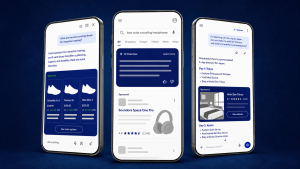
Are We The Last Generation Of Search Marketers?
For decades, search marketing was built around that behaviour. But that behaviour is starting to change. AI is shifting search from a list of links to a more conversational experience.